
Don’t Want To Fry Your Small Engine & Get Towed Home? Read On…

Related: Fuelling Tips
Ethanol increase is happening now. For several years, we’ve gotten used to ethanol in our gasoline.
But, recent gasoline regulatory framework changes by federal and provincial governments are altering our reality at the pumps.
Working closely with Michel Garneau, Editor of Motoneige Quebec Magazine, we’ve put together a timely Q&A about what you need to know so you don’t get towed home…
What’s Happening To Gas Station Ethanol?
As of 2023, gasoline contained up to 10% ethanol content (E10), which most small engines can handle. However, that acceptable content is now increasing to reach an unacceptable E15 by 2030. And it’s already started in Ontario & Quebec with ethanol increases exceeding 10% in both regular and mid-grade gas. What’s more, 15% ethanol warnings are now appearing at some gas stations, with many more to come.

E15 Warning On Ontario Gas Pump. Photo: Terry Vaudry
What’s Affected By An Ethanol Increase?
Anything over E10 is dangerous to gas-powered, 2-stroke small engines. So, anyone who owns and uses them will be affected. That includes all powersports recreational vehicles, marine vessels and many emergency services. Plus, utility usage at our homes, farms, cottages and workplaces.

Gas-Powered Small Engines Threatened by Ethanol Increase. Photo: Karl Tremblay
Does Ethanol Increase Affect All Gas Grades?
No, premium fuel maintains a lower level of ethanol, making it the only safe choice at the pumps for gas-powered, 2-stroke small engines at this time. As noted above, both regular and mid-grade fuel should be avoided.
How Does Ethanol Increase Threaten Small Engines?
Existing ethanol levels already aggravate small engine corrosion and storage issues. But an ethanol increase can cause either carbureted or fuel injected 2-stroke small engines to overheat and suddenly seize.
Why? Because higher ethanol-induced oxygenation of the combustible mixture causes a more damaging chemical reaction in a small engine’s combustion chamber. Specifically, more ethanol-related oxygen atoms cause the temperature of combustion to rise higher than with E10 or less. Result: your small engine is toast.

Always Carry Premium Fuel On Your Sled – Just In Case! Photo: Al Fletcher
Does Ethanol Increase Affect 4-Stroke Small Engines?
Over time, an ethanol increase can result in internal engine damage that can compromise reliability and longevity. But although less likely to suddenly seize up, 4-stroke engines can still be severely compromised. Meanwhile, they are also susceptible to corrosion and storage troubles.
Can Small Engine Additives Prevent Ethanol Increase Damage?
A wide range of gasoline additives are available on the market. But no existing additive compensates for the sheer numbers of oxygen atoms added to the reaction by increased ethanol. Or prevent overheating damage.
Many available additives are designed for medium to long-term storage (i.e. they are “stabilizers”). Meanwhile, octane booster additives are targeted to insufficient octane in the gasoline. However, the underlying ethanol increase problem is not related to octane rating. And therefore, a booster additive won’t resolve the ethanol increase issue.
Why Do Automobiles Engines Tolerate Ethanol Increase?
It’s a question of technology, specifically fuel delivery systems. Gasoline-powered cars, at least those sold in North America, come equipped with sophisticated “closed-loop” fuel injection systems. These systems allow for a much wider range of ethanol adaptation than the “open loop” injection systems in snowmobiles. Or the carburetors that remain popular in certain sled models (as well as in most available gas-powered small engines).
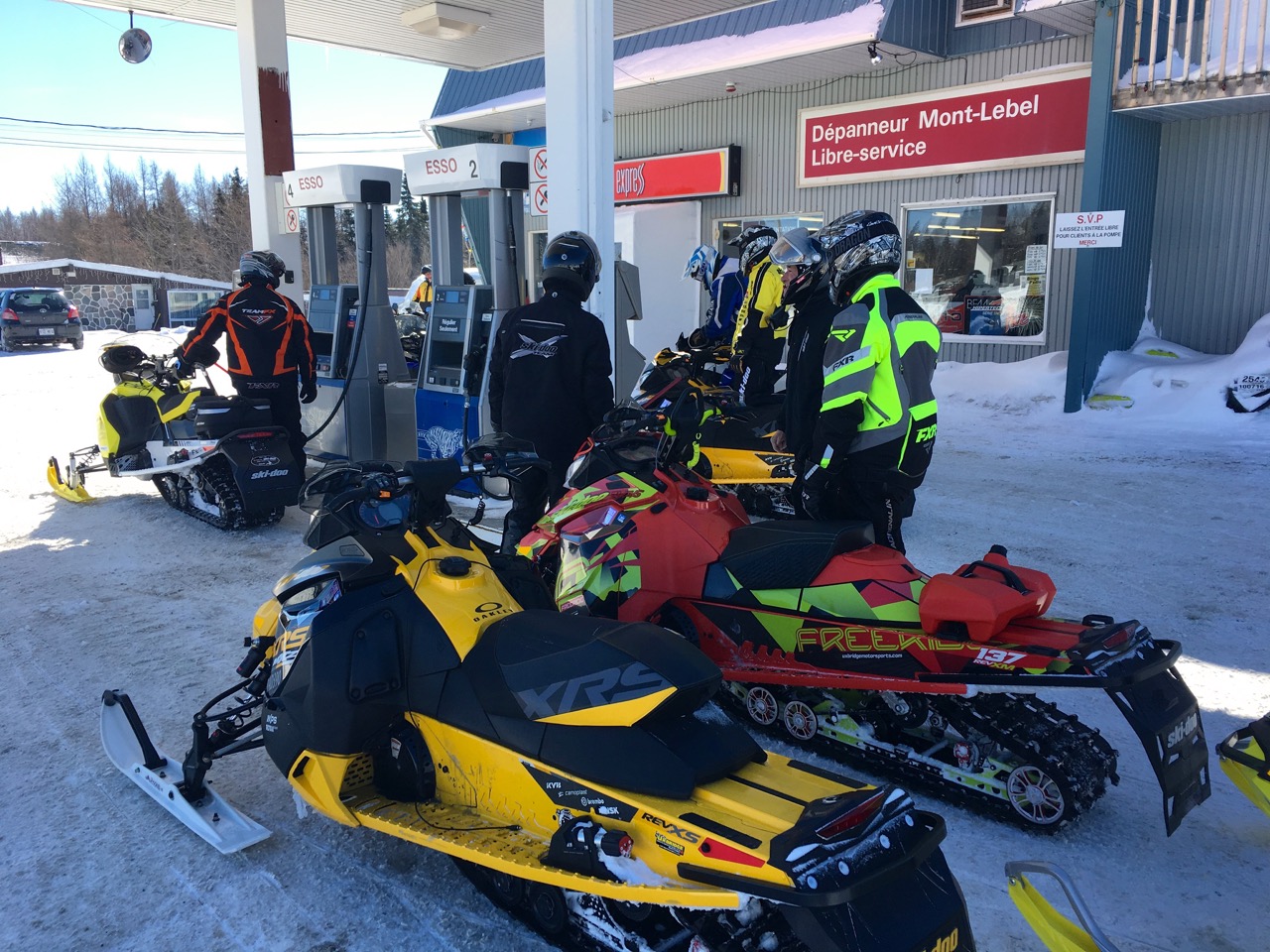
Only Fill Up With Premium. Photo: Martin Lortz
How Can Snowmobilers Avoid Engine Damage?
Riders should start using premium gas exclusively, if not doing so already. Also, be more aware of planning fuel stops – more time may be needed for fill-ups if there’s only one premium pump. And carry extra premium in a gas caddy on your sled to help get to the next premium station. On tours through remote areas, maybe even consider calling ahead to make sure a planned gas stop has premium. And don’t ride anywhere you can’t get premium fuel or you might get towed home!
What Other Impacts Can Snowmobilers & Other Small Engine Owners Expect?
It’s unlikely that a manufacturer warranty or an extended warranty will cover a higher ethanol-related engine seizure. Thus, you’ll have two choices if your small engine’s destroyed from using too-high ethanol. Get it repaired at your own expense or junk the whole piece of equipment. So, always read your operator’s manual and choose gasoline that complies with the manufacturer’s recommendation regarding ethanol.

E10 Max Gas Cap Warning. Photo: Michel Garneau
Also, beware of leaving ethanol content gasoline in any engine during storage. That’s because of ethanol’s ability to mix with water and separate from gasoline (known as phase separation). When this water-ethanol mixture settles to the bottom of the tank, serious post-storage issues will likely follow.

Simulation of Phase Separation in Small Engine Fuel Tank (gas on top, ethanol/water mix on bottom).
And Just In Case You’re Wondering…Does Ethanol Increase Affect Trail Grooming Equipment?
Fortunately, industrial snow grooming equipment typically has diesel power And thus, it’s unaffected by the present ethanol increase – so the groomers will keep on rolling!

Photo: Al Fletcher
My Last Word
Small engine owners must beware that yesterday’s ethanol content reality no longer applies following recent changes in the regulatory framework. Frankly, I’m appalled that the sled, ATV, SxS, motorcycle, marine and small outdoor power equipment manufacturers aren’t all over this.
If not for their own sakes. Then on behalf of millions of their existing small engine customers. Why aren’t these companies actively lobbying Canadian governments and getting the media on board to stop this ethanol increase? Hopefully, it’s not too late already!
Like This Post? Follow Me on Facebook!
Check out more Sled Tips.
The tips and advice in this blog are the opinions of the author, may not work in every situation and are intended only for the convenience and interest of the reader, who has the personal responsibility to confirm the validity, accuracy and relevancy of this information prior to putting it to their own use.